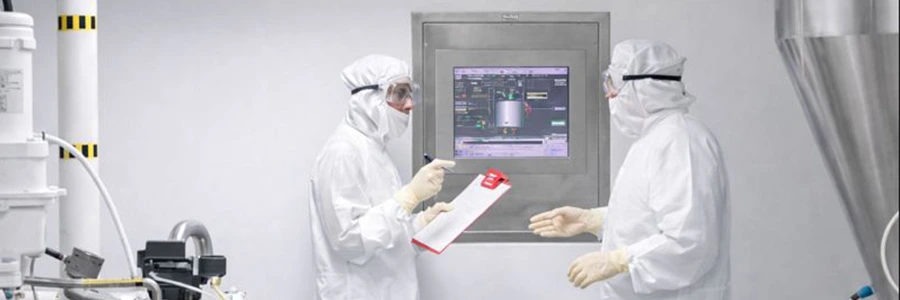
Human machine interfaces used in industrial, defense, and hazardous environments must remain usable when operators are wearing gloves and other protective equipment. In sectors such as oil and gas, defense, marine operations, and heavy industry, gloves are mandatory rather than optional. HMIs that function reliably in controlled environments but become unreliable when used with gloves introduce operational risk and potential safety concerns.
Designing HMIs suitable for gloved operation requires deliberate engineering decisions that address touch technology, ergonomics, visual clarity, environmental exposure, and applicable regulatory compliance. These considerations must be addressed at the display and interface level early in the design process, rather than being treated later as software-level adjustments or configuration workarounds.
Effective HMI design begins with a clear understanding of the operational environment and the protective equipment used by operators. Gloves vary in material, construction, and purpose, including nitrile, latex, neoprene, leather, insulated thermal gloves, cut-resistant gloves, and chemical-resistant. Thickness, rigidity, and surface texture directly influence touch accuracy and responsiveness when operating HMIs with gloves.
Environmental conditions further shape design requirements. HMIs deployed outdoors, in marine settings, or in cold climates must remain operable when users wear thick or insulated gloves. In hazardous locations, gloves are often used in combination with flame-resistant garments or chemical protection, further reducing dexterity. These limitations should be treated as primary design requirements and addressed during the initial design stages.
Touch technology selection is one of the most critical factors in enabling reliable glove operation and compatibility.
Projected capacitive touch screens are widely adopted due to their optical clarity and durability. However, standard consumer-grade products often struggle to detect gloved input. Industrial-grade projected capacitive systems can be tuned for increased sensitivity and gloved-hand detection, enabling operation with thin to medium-thickness gloves. Very thick or heavily insulated gloves may still require additional tuning or alternative solutions.
Resistive touch screens continue to play an important role in industrial applications where glove compatibility is non-negotiable. Because resistive technology responds to applied pressure rather than electrical conductivity, it remains operable with virtually any glove type. While resistive touchscreens typically do not match the optical performance of projected capacitive systems, they offer predictable and consistent behavior in demanding environments.
Other touch technologies, such as infrared touch frames or surface acoustic wave systems, are used in specialized applications but are less common due to their sensitivity to contamination or increased mechanical complexity.
Gloved operation inherently reduces pointing accuracy and tactile feedback. The graphical user interface layouts and control elements must compensate for reduced tactile feedback and reduced pointing accuracy.
Touch targets should be significantly larger than those used in non-gloved interfaces and spaced adequately to minimize accidental activation. Interface layouts should avoid reliance on fine motor control. Gesture-based interactions, such as pinch or multi-finger inputs, are generally unsuitable for gloved operation and should be avoided. Where advanced interactions are required, single-touch alternatives should be provided.
Clear visual confirmation of inputs is critical when tactile feedback is limited. Audible feedback or distinct visual indicators further assist operators in confirming actions when gloves and protective equipment reduce sensation and dexterity.
Protective gear often includes helmets, face shields, or goggles that affect viewing angles and contrast perception. HMIs must remain readable under these conditions.
High bright displays are commonly required for outdoor or high ambient light environments. Optical bonding improves contrast, reduces internal reflections, and enhances mechanical durability. These characteristics become more critical when operators view the display through protective eyewear.
Interface design should prioritize clarity. Font selection, contrast ratios, and information hierarchy must support rapid interpretation, particularly in safety-critical or time-sensitive applications.
HMIs designed for gloved operation are frequently deployed in harsh conditions. Enclosure design and environmental protection play a direct role in long-term usability.
Ingress protection ratings such as IP65 or IP66 indicate resistance to dust and water ingress. In marine or washdown environments, these ratings help ensure the touch surface remains functional after exposure to moisture or contaminants.
Mechanical durability is also essential. HMIs may experience vibration, shock, and repeated impacts. Alignment with recognized environmental test methods, such as those defined in MIL-STD-810, provides a consistent reference for evaluating durability in industrial and defense contexts.
Surface treatments should also account for abrasion and chemical exposure. Gloves used in industrial settings may carry oils, solvents, or particulates that degrade unprotected surfaces over time.
In oil, gas, and chemical processing environments HMIs may be installed in classified areas. Systems intended for use in Class I, Division 2 locations must be designed to reduce ignition risk in the presence of flammable gases or vapors.
These requirements influence enclosure construction, internal power levels, and surface temperature management. Addressing zone-specific requirements early in the design process helps prevent costly redesigns and minimizes operational disruption during system integration.
For HMIs intended to support gloved operation across multiple industries, control over display design and assembly provides a significant advantage. Designing, manufacturing, and assembling industrial displays in-house allows tighter control over touch sensitivity, optical bonding processes, protective overlays, and enclosure integration.
VarTech Systems designs and builds custom-tailored systems using proven touch solutions, supported by consistent engineering practices across its HMI and computing platforms. This approach enables display configurations to be aligned with specific application requirements while maintaining consistency across product families. The result is improved alignment between mechanical design, touch performance, and environmental protection across the product portfolio.
HMIs used with gloves are typically exposed to higher mechanical stress than consumer devices. Long-term maintainability must therefore be considered during both design and product selection.
Features such as replaceable protective overlays, serviceable connectors, and controlled component revisions help extend usable life. Calibration stability is particularly important for capacitive systems configured for glove sensitivity.
Manufacturers that maintain consistent platform designs and documented change control reduce the risk of interface behavior changing over time, which is critical in regulated or validated environments.
To summarize, designing HMIs for use with gloves and protective gear is a functional requirement driven by safety, environmental conditions, and operational reliability. Touch technology, interface design, optical performance, environmental durability, and regulatory alignment must be evaluated as interconnected elements. An HMI that remains responsive and readable while operators are fully protected supports safer operation, improved efficiency, and long-term system reliability in industrial, defense, and hazardous applications.
Based in Clemmons, North Carolina, VarTech Systems Inc. engineers and builds custom industrial and rugged computers, monitors, and HMIs.