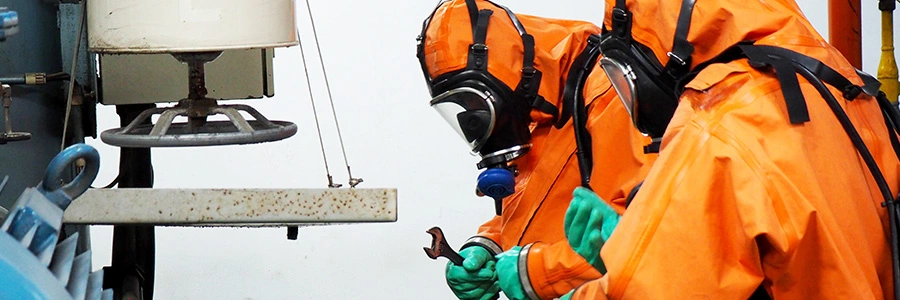
Hazardous areas are settings in which fire or explosion hazards may exist due to flammable gases, flammable liquid-produced vapors, combustible liquid-produced vapors, combustible dust, or ignitable fibers/debris. These locations may contain explosive gases, explosive dusts, or explosive atmospheres, and are defined by the presence of explosive or ignitable mixtures.
Hazardous areas, also referred to as potentially explosive atmospheres, are classified based on the likelihood and duration of these conditions. Hazardous materials include any substance capable of producing an explosive or ignitable mixture in these environments. The classification of a hazardous area may be documented in area classification drawings, which outline the specific zones and classifications.
Hazardous areas classes describe the type of hazardous materials present and the likelihood that a flammable or combustible concentration or quantity is present in a particular location, including whether hazardous materials may be present continuously, intermittently, or only under abnormal operating conditions, such as in the case of accidental exposure.
Each room, section, or area is uniquely rated when determining classifications. Hazardous area classification considers whether hazardous materials are present during normal operation or normal operating conditions, and whether they exist in quantities sufficient to create an ignitable concentration.
Every location is assigned a Group designation based on the physical properties of the substance and the ease of ignition. Hazardous area classifications help to ensure that appropriate equipment is used in specific operating environments and that proper safety and installation practices are followed.
Hazardous locations must be properly identified, and documentation must be made available to all individuals who design, install, inspect, maintain, and operate electrical equipment there. Proper classification helps mitigate explosion risks and ensure safety for personnel and equipment.(1)
The Class/Division classification system outlined by the National Electrical Code (NEC) and Canadian Electric Code (CEC) is North America’s primary hazardous area classification system.
Another widely used method is the Zone system, which is common internationally, especially in Europe and, increasingly, in North America. Both the Class/Division and Zone systems are used to identify hazardous classified locations and guide safety requirements for electrical equipment in explosive atmospheres.
The National Fire Protection Association (NFPA) 700 defines the hazardous location classification system in the United States. National Electrical Code® (NEC) (2)
VarTech Systems custom manufactures its industrial computers, monitors, and enclosures to the exact specifications required based on your operating environment.
VarTech offers certified Type-X and Type-Z purge and pressurization systems to ensure hazardous materials, namely gases and dust, cannot enter the enclosure, enabling electrical equipment to be safely operated without the risk of fire or explosion. Compliant electrical installations are essential in hazardous areas to prevent fire and explosion hazards.
The Type-X purge system we use is certified for CID1 (Class I Division I) and CIID1 (Class II Division I) use, and the Type-Z purge system we use is certified for CIID2 (Class II Division I) use.
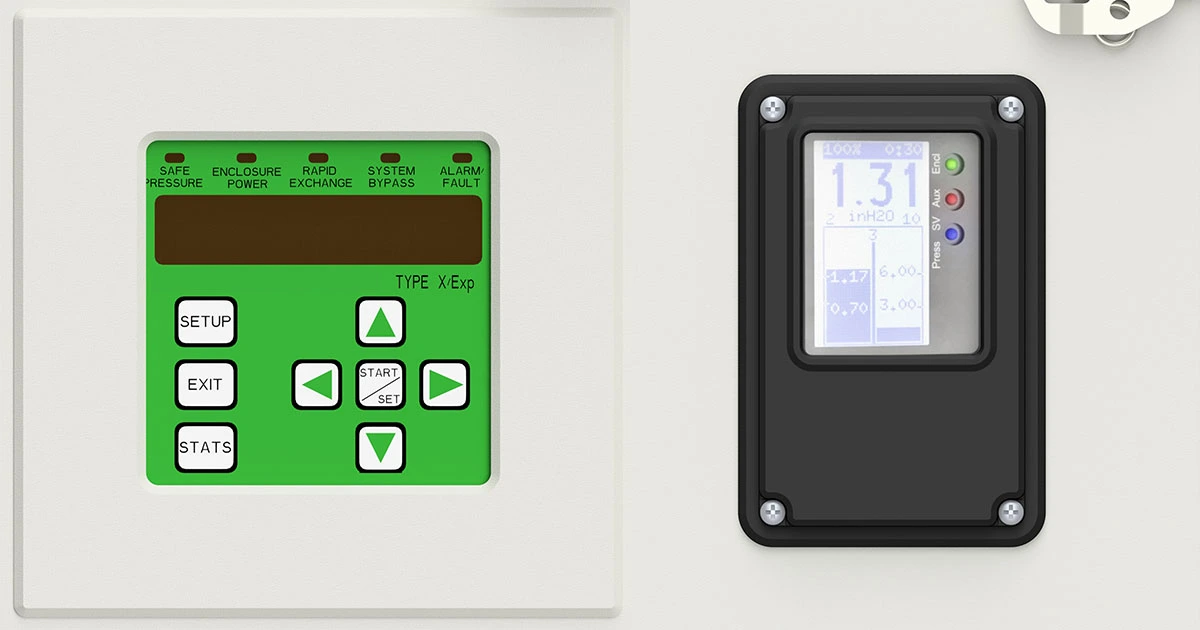
Our products incorporate explosion protection methods and protection techniques, such as increased safety, intrinsic safety, oil immersion, and powder filling, to minimize ignition risks. Intrinsic safety limits electrical energy within equipment to prevent ignition.
The certified purge systems within VarTech’s products are contained in fully sealed stainless-steel enclosures built to meet NEMA 4X and IP66 protection standards to perform in the world’s harshest environments.
Our enclosures are designed according to recognized protection concepts and are suitable for housing electronic equipment, including circuit breakers, ensuring that all equipment built for hazardous areas meets stringent safety standards. Ingress protection ratings ensure that equipment is safeguarded against solid foreign objects and water.
We also offer CID2-certified computers and monitors in our DiamondVue and ToughStation product lines, the display sizes of which range from 10.4 inches to 24 inches.

Though commonly referred to with digits, such as Class 1 Division 1, Roman numerals, such as Class I Division I, are used to identify classes and divisions.
Hazardous area classes also consider the presence of combustible process gases and flammable liquids, as these substances influence the classification and safety requirements.
Flammable gases, flammable liquid-produced vapors, or combustible liquid-produced vapors may be present. Class I areas may contain explosive gases, such as hydrogen sulfide and carbon monoxide, which can create an explosive gas atmosphere.
Gases in these areas are classified into gas groups based on their physical properties and equivalent hazard; the same gas group may include different gases with similar ignition risks, meaning atmospheres with the same gas or equivalent hazard are grouped together for safety purposes.
The selection of equipment for Class I locations depends on the auto ignition temperature, ignition temperature, temperature class, and temperature classification of the explosive gases present.
Examples may include oil drilling platforms and refineries.
Explosive or ignitable mixtures are present in normal conditions.
Ignitable concentrations are present in abnormal conditions.
Combustible dust may be present.
Class II areas may also involve conductive dust, which poses additional risks due to its ability to conduct electricity. Grain silos and mines are common examples of Class II locations.
Ignitable concentrations are present under normal conditions.
Ignitable concentrations are present in abnormal conditions.
Easily ignitable fibers or debris may be present. Textile mills, paper mills, and wood processing facilities are common examples of Class III locations.
Ignitable concentrations are present in normal conditions.
Ignitable concentrations are present in abnormal conditions.
The group identifies the type of material and the atmosphere's location.
Acetone, ammonia, ethyl alcohol, gasoline, methane, natural gas, propane, or gases/vapors of similar hazards are present.
Flammable gas, flammable liquid-produced vapor, or combustible liquid-produced vapor mixed with air that may burn or explode, having either a maximum experimental safe gap (MESG) value less than or equal to 0.45 mm or a minimum igniting current ratio (MIC ratio) less than or equal to 0.40.
Flammable gas, flammable liquid-produced vapor, or combustible liquid-produced vapor mixed with air that may burn or explode, having either a maximum experimental safe gap (MESG) value greater than 0.45 mm and less than or equal to 0.75 mm or a minimum igniting current ratio (MIC ratio) greater than 0.40 and less than or equal to 0.80.
Flammable gas, flammable liquid-produced vapor, or combustible liquid-produced vapor mixed with air that may burn or explode, having either a maximum experimental safe gap (MESG) value greater than 0.75 mm or a minimum igniting current (MIC) ratio greater than 0.80.
Atmospheres contain combustible metal dust, including aluminum, magnesium, and their commercial alloys, or other combustible dust whose particle size, abrasiveness, and conductivity present similar hazards in the use of electrical equipment.
Atmospheres contain combustible carbonaceous dust with more than 8% total entrapped volatiles or that have been sensitized by other materials so that they present an explosion hazard.

Whether for CID1, CID2, CIID1, or CIID2, VarTech Systems' experienced Project Managers are available to assist you in selecting a computer, monitor, or workstation that meets your operation's requirements.
References:
Based in Clemmons, North Carolina, VarTech Systems Inc. engineers and builds custom industrial and rugged computers, monitors, and HMIs.