
Operating electronics in extreme cold environments presents unique challenges. At sub-zero temperatures, materials become brittle; lubricants thicken, and electronic components may fail.
MIL-STD-810H testing has demonstrated that cold can cause embrittlement of metals and plastics, the binding of moving parts due to differential contraction, and loss of lubrication as oils gel.
Moisture can also condense and freeze inside equipment, leading to ice formation that damages electronics or seals.
Rugged industrial computers overcome these challenges through specialized design, from wide-temperature components to heater systems, ensuring reliable performance even in Arctic conditions.
Cold affects both materials and electronics differently than heat does. Below-freezing temperatures can:
Low temperatures also slow semiconductor reactions, which can affect processor stability. Memory modules may fail to initialize if the firmware does not handle power sequencing properly in freezing conditions. These combined stresses make sub-zero operation one of the toughest reliability tests for industrial computing.
Rugged computer manufacturers like VarTech Systems engineer devices with thermal resilience at their core. Several design principles enable consistent performance in sub-zero environments:
All critical elements, including CPUs, circuit boards, and drives, are rated for extended temperature ranges, typically -40°C to +85°C. These parts maintain full functionality in sub-freezing conditions where commercial electronics would fail.
To manage cold start-ups, many non-certified rugged systems include internal heaters that warm enclosures before operation. VarTech’s extreme temperature packages use these heaters (in non-certified units) to ensure reliable booting and operation at -40°C. This prevents display freezing, drive start-up failure, and damage from rapid temperature changes.
VarTech panel PCs and monitors feature optical bonding that eliminates the air gap between LCD and cover glass. This design prevents internal fogging or ice formation and strengthens the display against thermal stress. Bonding also enhances clarity and contrast in cold, bright outdoor conditions.
Stainless steel or aluminum housings with NEMA 4/4X or NEMA 6 (IP65/IP66/IP67 equivalent) protection keep snow, water, and condensation out. Gaskets and seals are designed for cold elasticity, maintaining tight seals even at -40°C. Internal insulation further stabilizes the temperature of sensitive electronics.
Some rugged systems incorporate thermal strategies designed to support stability during cold start-ups while maintaining sealed enclosures. VarTech products are engineered to manage internal temperature changes through wide-temperature components and properly sealed chassis.
VarTech Systems produces multiple families of industrial computers, monitors, and workstations built for frigid environments. Each series offers proven wide-temperature operation, with minimum ratings reaching -20°C or -40°C, depending on configuration.

VarTech’s flagship line of industrial computers and monitors, DiamondVue units are built for continuous operation in a range of industries. Many models function from -40°C to +70°C and are available in sizes from 6.5″ to 43″, with up to IP66 protection. Optional heater kits in non-certified models ensure reliable start-up at -40°C. Select models are also Class I Division 2 certified, combining cold resistance with explosion protection.

Fully sealed and designed for heavy industrial or outdoor environments, ToughStation computers operate in extreme cold down to -40°C. Enclosures meet IP65, IP66, or IP67 standards and can include large touchscreens up to 43″. Hazardous-area versions, equipped with purge systems, maintain reliable operation between -20°C and +60°C. These systems are used in polar mining, chemical plants, and high-altitude installations where cold, moisture, and impact resistance are essential.

Purpose-built for outdoor and marine environments, All-Weather systems are fully sealed and corrosion-resistant, with operating ranges from -40°C to +70°C. High-brightness heated displays remain visible and responsive during freezing rain or snow, making them ideal for naval ships, offshore rigs, and coastal operations.

Designed to be compact, PowerCube small form factor computers combine efficiency and durability. With an operating range from -40°C to +80°C, they thrive in sub-Arctic and desert conditions alike. Aluminum heat-dissipating enclosures and solid-state components eliminate moving parts, ensuring stability in freezing weather. PowerCube systems are deployed in remote stations, kiosks, and vehicles exposed to severe cold.
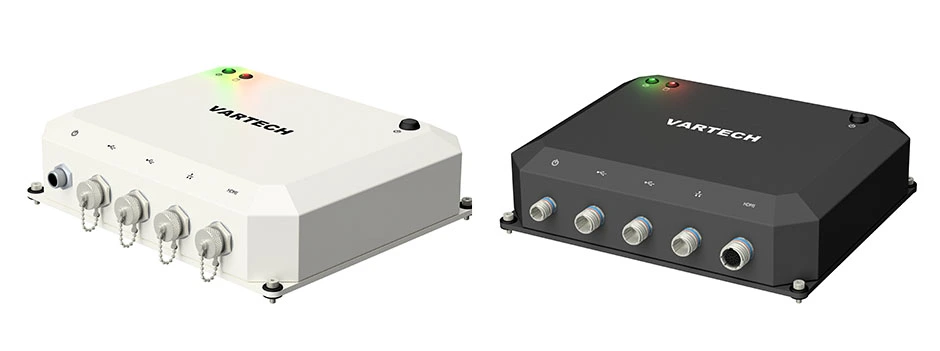
The ToughCube platform supports operation down to -40°C, depending on configuration. Its sealed enclosure and solid-state components provide durability in a compact form factor, making it suitable for harsh industrial or mobile environments.
Engineering for extreme cold extends beyond materials to include validation through recognized standards.
VarTech systems units are built to meet Method 502.7, which evaluates equipment under freezing conditions. Tests simulate both storage and operational cold to ensure no cracking, binding, or lubricant failure. Certification ensures dependable performance in Arctic bases, mountain outposts, and aerospace environments.
Repeated transitions between cold and warmer temperatures can cause condensation and internal ice. Tests such as MIL-STD Method 524 confirm the enclosure’s integrity through these cycles. VarTech systems use cold-flexible gaskets and GORE vents to manage internal pressure and moisture safely.
In addition to military testing, VarTech computers carry CE, FCC, ATEX certified purge systems, and Class I Division 2 certifications. Compliance with IEC 60068-2-1 further validates durability in industrial cold. These certifications confirm that each system performs safely and effectively even under the harshest temperature extremes.
Field-deployable systems must endure freezing transport and outdoor operations in Arctic conditions. Rugged panel PCs and embedded computers are integrated into vehicles, radar stations, and mobile command units. The All-Weather series provides sealed, cold-ready systems that maintain reliable operation in sub-zero military environments where consistent performance is essential.
Exploration and refining in extreme sub-zero regions depend on computers that withstand snow, ice, and sub-zero wind. VarTech’s DiamondVue and ToughStation HMIs operate safely at -40°C, enabling operators to monitor and control drilling systems even during blizzards. IP67-rated enclosures prevent ingress from ice or salt spray.
Cold storage facilities, frozen food production lines, and refrigerated logistics environments require computing systems that remain dependable in chilled conditions. Rugged panel PCs and sealed HMIs are commonly used where exposure to cold air, moisture, or sanitation procedures is routine.
Pharmaceutical production, cleanrooms, and temperature-regulated formulation areas rely on stable computing interfaces that support consistent operation in controlled environments. Rugged sealed systems are often selected where reliability is essential.
Chemical manufacturing facilities in colder climates may require rugged systems that tolerate low ambient temperatures and resist moisture or corrosive exposure. Sealed enclosures and wide-temperature components are often preferred to maintain dependable operation.
From locomotives to wayside control systems, VarTech rugged PCs withstand snowdrifts and repeated freeze-thaw cycles. Their consistent performance keeps rail networks operational even during severe winter storms.
Wind farms and solar installations in northern latitudes depend on rugged PLCs and HMIs to maintain SCADA control through harsh winters. These systems must remain functional during long periods of darkness and sub-zero wind chill.
Research vessels, offshore rigs, and polar outposts face simultaneous challenges of cold, humidity, and salt corrosion. VarTech’s All-Weather and ToughStation platforms deliver continuous operation amid freezing spray, condensation, and sea ice, ensuring uninterrupted data acquisition and system control.
Extreme cold poses one of the greatest threats to electronics, but rugged industrial computers from VarTech Systems turn this challenge into a proven strength.
By combining wide-temperature electronics, integrated heaters, sealed enclosures, and rigorous design practices, these systems maintain full functionality at -40°C and below. VarTech’s DiamondVue, ToughStation, All-Weather, PowerCube, and ToughCube product lines exemplify this engineering excellence, providing reliable computing where ordinary systems would freeze.
For industries operating in Arctic cold or high-altitude environments, these solutions ensure safety, continuity, and mission success, no matter how low the temperature drops.
Based in Clemmons, North Carolina, VarTech Systems Inc. engineers and builds custom industrial and rugged computers, monitors, and HMIs.