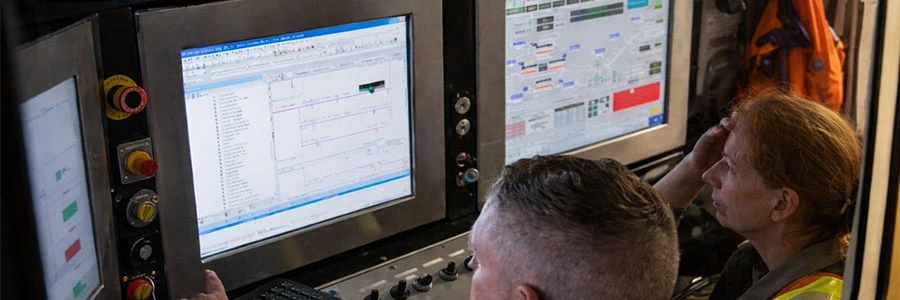
Industrial computers are often deployed in systems where replacement cycles span many years and, in some cases, more than a decade. Manufacturing lines, marine platforms, energy infrastructure, and defense-related systems depend on computing hardware that must remain operational, supportable, and configurable over extended periods.
In these environments, hardware obsolescence or unplanned design changes can introduce operational risk, increase maintenance costs, and trigger costly system revalidation efforts. Evaluating an industrial computer for long lifecycle support therefore requires a structured, technical assessment that goes beyond raw performance specifications.
A long lifecycle does not imply static hardware. It implies controlled evolution. Industrial systems are typically designed around validated software stacks, fixed mechanical interfaces, and defined electrical architecture. Any unplanned change to the computing platform can require software retesting, regulatory review, or field modifications.
Lifecycle expectations should be established early in the system design process. These expectations typically include deployment duration, environmental exposure, regulatory constraints, and maintenance strategy. In many industrial and defense programs, lifecycle requirements commonly extend from seven to fifteen years.
Platform stability is a primary indicator of lifecycle suitability. Industrial computers intended for long-term deployment should be based on processors and chipset families with extended availability and predictable roadmaps.
Engineers should assess whether the manufacturer controls platform selection and validation internally or relies on short-lived commercial reference designs. Stable platforms reduce the likelihood of mid-program redesigns and support consistent spare part availability.
Equally important is component-level change management. Manufacturers that track component revisions and document substitutions can mitigate supply chain disruptions without altering system behavior, form factor, or interfaces.
Long lifecycle systems are frequently exposed to conditions that accelerate wear and degradation. Temperature extremes, vibration, humidity, salt exposure, and airborne contaminants all influence long-term reliability.
Environmental durability is often evaluated against recognized frameworks such as MIL-STD-810, which defines test methods for temperature cycling, shock, vibration, and corrosion-related exposure. While not all applications require formal testing, alignment with these methods provides a consistent reference for environmental robustness.
Enclosure protection also plays a critical role. Ratings such as NEMA 4, NEMA 4X, IP65, and IP66 indicate resistance to water ingress, dust, and, in the case of NEMA 4X, corrosion. These characteristics directly affect service life in industrial and marine environments.
Mechanical design should also support serviceability. Secure mounting options, sealed connectors, and accessible interfaces reduce maintenance time and minimize the risk of damage during installation or field service.
Power architecture has a direct impact on lifecycle performance. Industrial computers designed for wide input voltage ranges are more tolerant of unstable or variable power sources common in mobile, marine, and remote installations.
Thermal management is equally critical. Passive cooling designs or controlled airflow architectures reduce dependence on moving components that can fail over time. When active cooling is required, fan selection, redundancy, and ease of replacement should be evaluated.
Operating thermal margins also influence component aging. Systems designed with conservative thermal headroom tend to experience lower failure rates and longer service life under continuous operation.
Hardware longevity must be supported by long-term software availability. Industrial computers should support operating systems with extended support lifecycles, including long-term servicing versions where applicable.
Engineers should verify ongoing support for BIOS, firmware, and device drivers throughout the expected lifecycle. The ability to maintain consistent firmware revisions and locked system images is especially important in regulated or validated environments.
Virtualization can also extend system relevance by decoupling applications from underlying hardware changes, although this approach introduces additional validation and support considerations.
Many industrial and defense systems operate under regulatory or standards-based constraints. Electromagnetic compatibility may be evaluated with reference to standards such as MIL-STD-461 or comparable civilian frameworks.
Deployments in hazardous locations introduce additional requirements. Systems intended for Class I, Division 2 environments must be designed to reduce ignition risk in the presence of flammable gases or vapors. Compliance is typically assessed against NEC classifications or international equivalents such as ATEX Zone 2.
Even when formal certification is not required, alignment with these standards simplifies system approval and reduces integration risk.
Long lifecycle support is not solely a technical attribute. It is also an organizational capability. Engineers and integrators should assess whether the manufacturer maintains control over design, assembly, configuration management, and documentation.
Indicators of strong lifecycle support include defined end-of-life policies, formal product change notification processes, and the ability to provide form-fit-function compatible replacements. Access to repair services, spare parts, and historical configuration data over time is equally important.
Supply chain transparency is a key factor. Manufacturers that rely heavily on volatile component sources may struggle to maintain consistent configurations across long deployment periods.
Lifecycle evaluation should extend beyond initial acquisition cost. Unplanned redesigns, recertification efforts, and extended downtime often exceed the original hardware cost over the life of a system.
Industrial computers built on stable platforms, with controlled revisions and long-term support infrastructure, tend to reduce total cost of ownership by minimizing engineering rework and operational disruption.
Evaluating industrial computers for long lifecycle support requires a system-level view. Processing performance alone is insufficient. Engineers and integrators must consider platform stability, environmental design, power and thermal management, software support, compliance alignment, and manufacturer capability as interconnected factors.
In long-duration industrial and defense applications, lifecycle planning is not a secondary concern. It is a core design parameter that directly influences reliability, maintainability, and program continuity over time.
Based in Clemmons, North Carolina, VarTech Systems Inc. engineers and builds custom industrial and rugged computers, monitors, and HMIs.