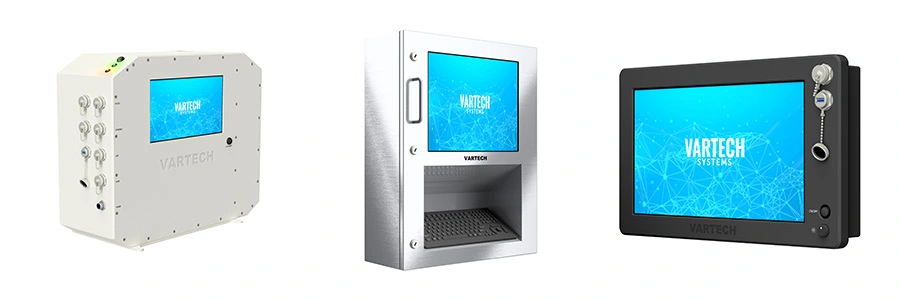
High-performance industrial PCs generate significant thermal loads. Processors, GPUs, power supplies, memory, and storage devices all contribute heat that must be removed to maintain stable operation.
At the system level, thermal management generally follows two approaches: passive cooling and active cooling. Passive systems rely on conduction, heat spreading, and natural convection without using fans to force air across components. Active systems use fans or blowers to create airflow and increase heat transfer.
Neither approach is inherently better. The appropriate strategy depends on processing power, component density, enclosure geometry, ambient temperature, environmental requirements, available space, and expected workload.
Passive cooling starts by creating an effective path for heat to move away from the components generating it.
For a processor, heat typically travels from the processor package through a thermal interface material, or TIM, into a heatsink, heat spreader, or another conductive structure. From there, the heat must ultimately reach a surface where it can be transferred to the surrounding environment.
Aluminum and copper are commonly used because of their relatively high thermal conductivity. However, material selection alone does not determine performance. The length and thickness of the conductive path, contact quality, surface area, and thermal interfaces all affect how efficiently heat moves through the system.
This becomes particularly important when airflow through the enclosure is restricted. In sealed system architectures, designers may need to transfer heat toward surfaces that can reject it externally without allowing outside air to circulate through the electronics.
For rugged platforms such as VarTech’s All-Weather computers, thermal requirements must therefore be considered alongside environmental protection requirements.
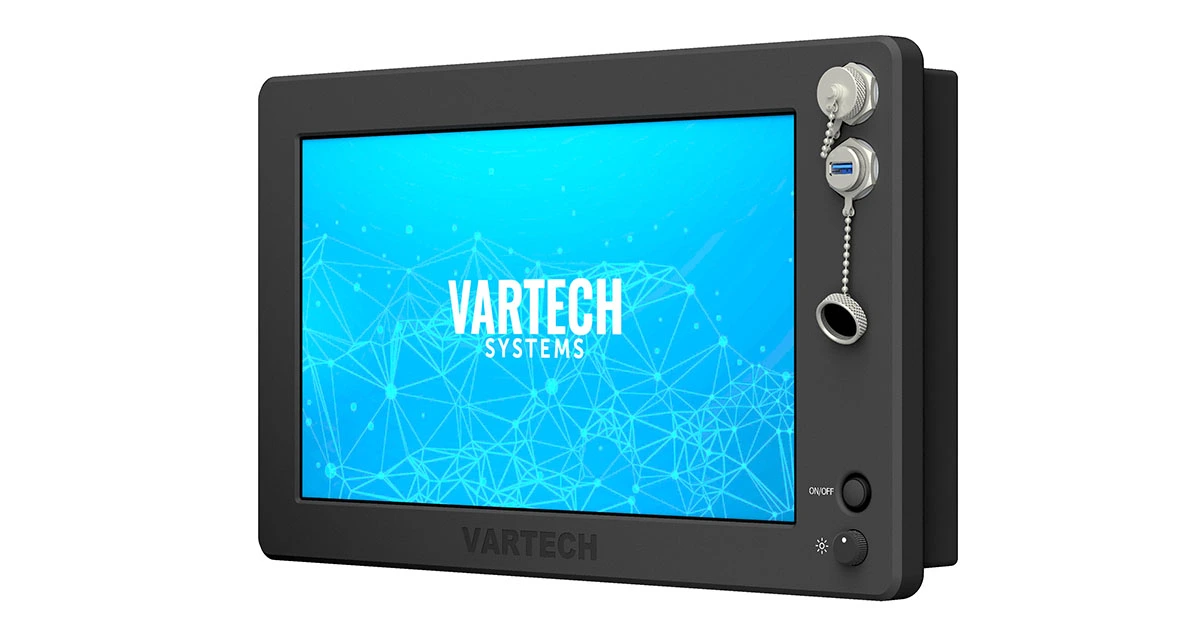
Conducting heat away from a component is only the first step. High-power components can produce concentrated thermal loads that need to be distributed across a larger area.
Heat spreaders perform this function by moving thermal energy away from localized heat sources and increasing the effective area available for subsequent heat transfer.
Their effectiveness depends on material conductivity, thickness, geometry, contact with the heat source, and the distance over which heat must travel.
Component placement also affects the thermal design. Multiple high-power devices located close together can increase local temperatures. For this reason, thermal management should be evaluated at the system level rather than treating each component independently.
When the application permits forced-air cooling, fans or blowers can increase heat-transfer capacity by moving air across heatsinks and other internal components.
Active cooling can be particularly useful when higher processing power or component density creates thermal loads that would require impractically large passive cooling surfaces.
The key consideration is not simply how much air a fan can move. Airflow must reach the components that require cooling and then carry the heated air out of the enclosure.
Intake and exhaust locations therefore matter. Expansion cards, cables, power supplies, and structural components can restrict airflow and create localized hotspots. Poor airflow paths can also allow heated exhaust air to recirculate through the system.
A properly designed active cooling system establishes a controlled path from intake to exhaust, directing cooler air toward critical components while minimizing obstructions and recirculation.
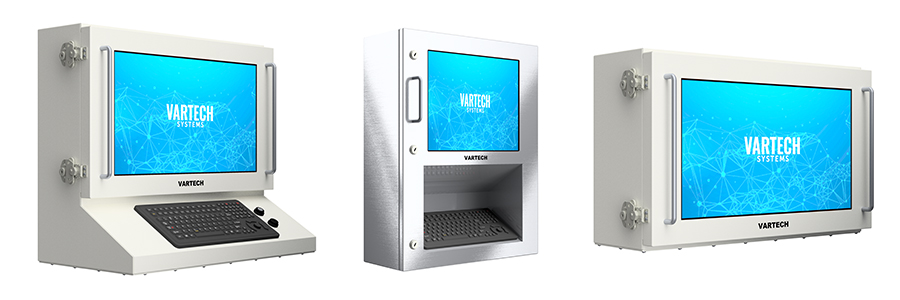
For workstation-class systems such as VarTech’s ToughStation, airflow requirements should be evaluated together with processing capability, component configuration, enclosure geometry, and the intended operating environment.
Passive and active cooling should not always be viewed as mutually exclusive architectures.
An actively cooled computer still depends on conduction to move heat from a processor into a heatsink. Heat spreading can distribute concentrated thermal loads before forced airflow carries that heat away. Likewise, passive elements can help move heat toward areas where system airflow is most effective.
The difference is primarily how the thermal energy is ultimately transferred from the system. A passive design depends on conductive paths, surface area, and natural heat transfer. An active design adds forced airflow to increase the rate at which heat can be removed.
This makes conduction, heat spreading, and airflow complementary tools rather than competing technologies.
The intended environment is a major factor when selecting a cooling strategy.
As ambient temperature increases, the temperature difference available to transfer heat from the system to its surroundings decreases. Higher ambient temperatures can therefore reduce the available thermal margin.
Dust and other airborne contaminants create another consideration for systems that exchange air with the surrounding environment. Applications requiring environmental sealing may restrict conventional ventilation and make conductive thermal paths more important.
Outdoor systems introduce additional variables. Direct solar exposure can add thermal load to an enclosure before internally generated heat is considered.
These differences help explain why systems intended for different industrial environments may require different thermal architectures even when they provide similar computing performance.
Thermal design should begin with the expected heat sources and operating environment rather than with a predetermined cooling method.
For applications where environmental isolation is a priority, passive techniques can provide a path for transferring heat without circulating external air through the electronics. Where higher thermal loads and environmental conditions permit airflow, active cooling can provide additional heat-transfer capacity.
In either case, the complete thermal path must be considered: moving heat away from the source, distributing concentrated thermal loads, and transferring that heat into the surrounding environment.
For high-performance industrial PCs, the objective is not simply to choose between a fan and a fanless design. It is to select and integrate the thermal mechanisms appropriate for the system’s performance requirements, enclosure, and operating environment.
Based in Clemmons, North Carolina, VarTech Systems Inc. engineers and builds custom industrial and rugged computers, monitors, and HMIs.