The history of the CPU (central processing unit) dates back to the late 1950s when the first CPU, called the UNIVAC 1103, was developed as part of the UNIVAC I computer. This early CPU was based on vacuum tubes and was relatively large and very slow compared to modern CPUs.
In the 1960s, transistor-based CPUs were developed, which were smaller and more efficient than vacuum tube-based CPUs. The rise of the semiconductor industry in the 1960s enabled the mass production of transistors and integrated circuits, driving rapid innovation. In 1960, IBM developed the first automatic mass production facility for transistors, making transistors more affordable and accessible, and accelerating advancements in computing technology.
The 1970s saw the development of microprocessors, which were even smaller and more powerful than earlier CPUs. Advances in digital circuit design during this era laid the foundation for modern CPU architecture.
Today, CPUs are made using microelectronic technology and are found in a wide range of devices, from smartphones to supercomputers. They are the primary component of a computer that performs most of the processing tasks.
The evolution of the central processing unit (CPU) was dramatically accelerated by the invention of the transistor and the integrated circuit. Transistors replaced bulky and unreliable vacuum tubes, making CPUs smaller, faster, and much more reliable. This shift allowed for higher clock speeds and reduced power consumption, paving the way for the compact and efficient modern CPUs we use today.
The next major leap came with the development of the integrated circuit, pioneered by Robert Noyce and Jack Kilby. Integrated circuits allowed all the essential components of a central processing unit—such as the control unit, arithmetic logic unit, and memory elements—to be placed onto a single chip of silicon. This innovation not only increased processing power but also drastically reduced the size and cost of CPUs. As a result, integrated circuits became the foundation for the microprocessors that power everything from desktop computers to smartphones.
Today, advanced manufacturing techniques and semiconductor materials enable modern CPUs to achieve impressive clock speeds while maintaining low power consumption, all within a single chip.
The microprocessor revolution began in 1971 when Intel introduced the 4004, the world’s first commercially available microprocessor. This breakthrough device integrated the arithmetic logic unit (ALU), control unit, and registers onto a single chip, transforming the computer industry by making it possible to build personal computers and desktop computers that were smaller, more affordable, and more powerful than ever before.
Following the 4004, Intel introduced the 8080 and 8086 processors, which became the backbone of early desktop computers and set the stage for the rapid growth of personal computing. The microprocessor revolution didn’t stop there—processor technology continued to advance, leading to the development of the first dual core processor by Advanced Micro Devices (AMD) in 2005. This innovation allowed a single chip to handle multiple instructions and multiple tasks at once, greatly improving efficiency and performance. Today, multi core CPUs are standard in modern processors, enabling users to run complex applications and multitask with ease. The integration of the arithmetic logic unit alu and control unit on a single chip remains a defining feature of the microprocessor revolution, driving continuous advancements in the computer industry.
The CPU is the main component of a computer that performs most of the processing tasks. It is responsible for executing instructions and carrying out various functions of the computer.
CPUs are made using microelectronic technology and come in a variety of sizes and shapes. They are found in almost all modern electronic devices, including computers, smartphones, and tablets. CPUs are made up of several parts, including the control unit, the arithmetic logic unit, and the registers, which work together to execute instructions and perform tasks.
Processors are placed and secured into a compatible CPU socket found on the motherboard. Processors tend to produce large amounts of heat; they are covered by a heat sink. These heat sinks are meant to keep the processor cool and running smoothly.
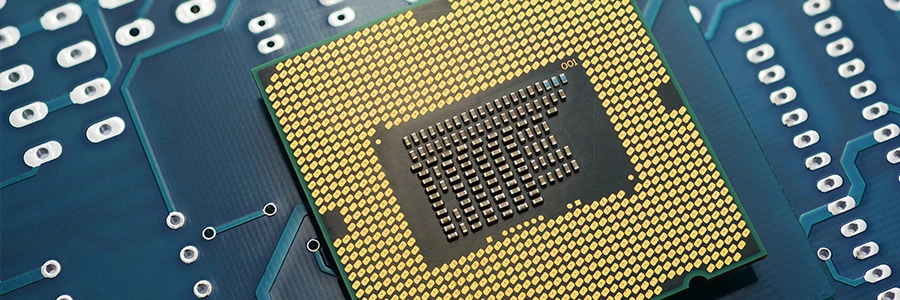
When installing your processor, you will notice a notched corner. This corner's purpose is to help you align the CPU onto the motherboard. The bottom of the processor contains hundreds of socket holes. The picture below shows the socket holes on the processor as well as the notched corner.

At the heart of every central processing unit lies the Arithmetic Logic Unit (ALU), a specialized component responsible for carrying out arithmetic and logical operations. The ALU performs essential tasks such as addition, subtraction, multiplication, and division, as well as logical operations like AND, OR, and NOT.
By executing instructions and processing data, the ALU enables the CPU to solve problems and make decisions based on the results of these operations.
Modern CPUs often feature multiple ALUs, allowing them to execute multiple instructions simultaneously and significantly boost overall processing power. The efficiency and speed of the arithmetic logic unit alu are critical to the performance of the entire CPU, and advanced techniques like pipelining and superscalar execution are used to optimize how the ALU handles arithmetic and logical operations.
As a result, the ALU plays a central role in executing instructions and ensuring that modern CPUs can handle the demands of today’s software and applications.
Its main purpose is to execute instructions and carry out various functions of the computer, such as performing calculations, accessing, and manipulating data, and controlling input and output devices. The CPU retrieves instructions from memory and decodes them, determines what actions need to be taken, and then carries out those actions.
It also controls the flow of data and instructions between the different parts of the computer. In this way, the CPU acts as the "brain" of the computer, coordinating and controlling all its activities. The CPU takes input from peripherals (mouse, keyboard, printer, etc.) and computer programs.
From here, the processor interprets what each of these things need. From here, the CPU does one of two things: it outputs the information to the monitor or performs the peripheral's requested tasks.

There are two main components in the CPU. The first one is ALU (arithmetic logic unit), whose role is to perform mathematical, logical, and decision operations. The second component is the CU (control unit), which directs all the process operations.
Over time, the CPU market has evolved significantly, with intense competition among manufacturers driving innovation and improvements in processor technology.
With that in mind, we can say that there are two main types of CPUs: desktop CPUs and mobile CPUs. Scalar processors handle one piece of data per instruction, while superscalar processors can execute multiple instructions per clock cycle, greatly enhancing processing throughput. The introduction of superscalar processor architecture has played a significant role in improving overall CPU performance.
Desktop CPUs are larger and more powerful and are typically used in desktop computers and servers. Intel processors have played a historically significant role in the development of personal computers, driving technological advancements and shaping the industry landscape.
Mobile CPUs are smaller and less powerful and are used in laptops and other portable devices. There are also specialty CPUs designed for specific purposes, such as embedded CPUs for use in control systems and other specialized applications.
In the past, computer processors used different numbers to identify the processor. The higher the number, the faster the processor. Companies stopped using these numbers and Intel introduced their Pentium processor. Since then, all computer processors started using names instead of numbers. Some other examples of these include Celeron, Core Duo, and Athlon. The most common processors used nowadays by Intel include the Core i3, i5, i7, and i9, with the Intel Core i9 serving as an example of a high-performance processor.
Most modern CPUs feature multiple cores, which enable multitasking and improved performance. These multiple cores are made up of individual processor cores, where each physical core is an actual hardware unit capable of executing processing tasks, as opposed to logical cores which are created through technologies like hyper-threading. Some systems use multiple processors to further enhance performance and enable parallel processing.
CPUs are general-purpose processors, but for graphics-intensive tasks such as video editing or 3D rendering, graphics processing units (GPUs) are specialized chips designed specifically for graphics and visual processing. Most modern CPUs incorporate advanced features such as multi-core architectures and hardware performance counters.
The memory system plays a crucial role in managing data storage and retrieval across multiple cores or processors, ensuring efficient execution of concurrent tasks. Operating systems interact with CPUs to manage hardware resources, enable multitasking, and support advanced features such as protected mode and virtual memory.
The speed at which a CPU can transfer data depends on several factors, including the CPU’s clock speed, the width of its data bus, and the speed of the memory and other components it is connected to. CPU performance is often measured in clock cycles, with higher clock speeds allowing more instructions to be executed per second. Additionally, cache memory plays a crucial role by storing frequently accessed data close to the processor, which helps speed up data transfer and processing.
In general, modern CPUs can transfer data at speeds of several gigahertz (billion cycles per second), which allows them to quickly process and retrieve data from memory and perform other tasks. The actual speed of data transfer can vary depending on the specific CPU and the system it is used in.
In any device that uses electrical signals, the data travels very close to the speed of light. The speed of light is equal to 299,792,458 miles per second. If you want to figure out how close to the speed of light a signal can get, you need to figure out the medium (metal in the wire) through which it is traveling.
On average, electrical signals travel around 75 to 90% of the speed of light.
Instruction Level Parallelism (ILP) is a key strategy used in modern CPUs to maximize processor performance. By enabling the CPU to execute multiple instructions at the same time, ILP increases the amount of work that can be done in each clock cycle. Several advanced techniques make this possible. Pipelining breaks down the execution of instructions into separate stages, so different instructions can be processed simultaneously at different points in the pipeline. Superscalar execution allows the CPU to issue and execute more than one instruction per clock cycle, further boosting throughput. Out-of-order execution enables the CPU to process instructions as soon as their required resources are available, rather than strictly following the original program order, which helps reduce delays caused by instruction dependencies.
These innovations, combined with improvements in semiconductor technology, have allowed modern CPUs to reach clock speeds of over 5 GHz and deliver exceptional aggregate performance. By leveraging instruction level parallelism, CPUs can efficiently execute multiple instructions, making them well-suited for demanding applications and multitasking environments.
As the central processing unit has become more powerful and complex, security concerns have taken center stage in the computer industry. Modern CPUs are vulnerable to sophisticated attacks, such as side-channel exploits like Spectre and Meltdown, which can potentially expose sensitive data by exploiting the way CPUs execute instructions and manage memory. Malicious software, including viruses and malware, can also target the CPU to compromise system resources and data integrity.
To address these risks, CPU manufacturers have introduced a range of security features, such as secure boot processes, trusted execution environments, and hardware-based encryption. The memory management unit (MMU) plays a vital role in CPU security by translating virtual memory addresses to physical addresses and enforcing memory protection, helping to prevent unauthorized access to critical data. Software developers also contribute to CPU security by adopting secure coding practices and implementing memory safety techniques. Together, these hardware and software measures are essential for safeguarding the central processing unit and ensuring the overall security of modern computer systems.
Based in Clemmons, North Carolina, VarTech Systems Inc. engineers and builds custom industrial and rugged computers, monitors, and HMIs.